
Liminal Spaces in Kyushu: 9 Real Places, From an Undersea Pedestrian Tunnel to a Showa-Era Steel Tower
Kyushu has a tunnel you can walk straight across under the sea, an underground mall with deliberately dimmed lights and a steel tower standing in a Showa-era port, all still places anyone can visit. At a quiet hour, a familiar part of your journey can suddenly feel like somewhere you have never been. Here are nine places registered on LIMap.
.jpg?width=1200)
In Kyushu, Liminal Spaces Gather Under the Sea, Underground and in Port Towers
The liminal spaces you find in Kyushu have two main features. The first is long passages under the sea or underground. In the undersea pedestrian tunnel linking Honshu and Kyushu, and in the underground mall of Tenjin in Fukuoka, corridors with the same view go on and on.
The second is towers and vessels by the harbor and the sea: a Showa-era steel tower, a tower built for an exposition in the late 1980s, a small ferry passing beneath a huge bridge. This article focuses on places in Fukuoka, Kitakyushu and Nagasaki chosen on one condition, that anyone can go there today, and also introduces the remains of a coal mine and railways that have finished their work.
Under the Sea and Underground: A 780-Meter Pedestrian Tunnel and a Dimly Lit Mall
The Kanmon Tunnel pedestrian walkway links Moji in Kitakyushu with Shimonoseki in Yamaguchi Prefecture under the sea. It opened in 1958 together with the road tunnel. Take an elevator down about 60 meters and a corridor about 780 meters long, lit by fluorescent lights, runs so straight that you cannot see its end. Partway along, a line on the floor marks the border between Fukuoka and Yamaguchi. It is free for pedestrians and open from 6:00 to 22:00.
Tenjin Underground Mall in Fukuoka is about 590 meters long and opened in 1976. Stone-paved floors and ornate iron ceilings inspired by 19th-century Europe run its length, and the lighting in the corridors is deliberately kept low. After the shops close or before they open, the empty corridors feel like the alleys of a city that does not exist.


Port Towers: A Red Showa-Era Steel Tower and a Tower Covered in Mirrors
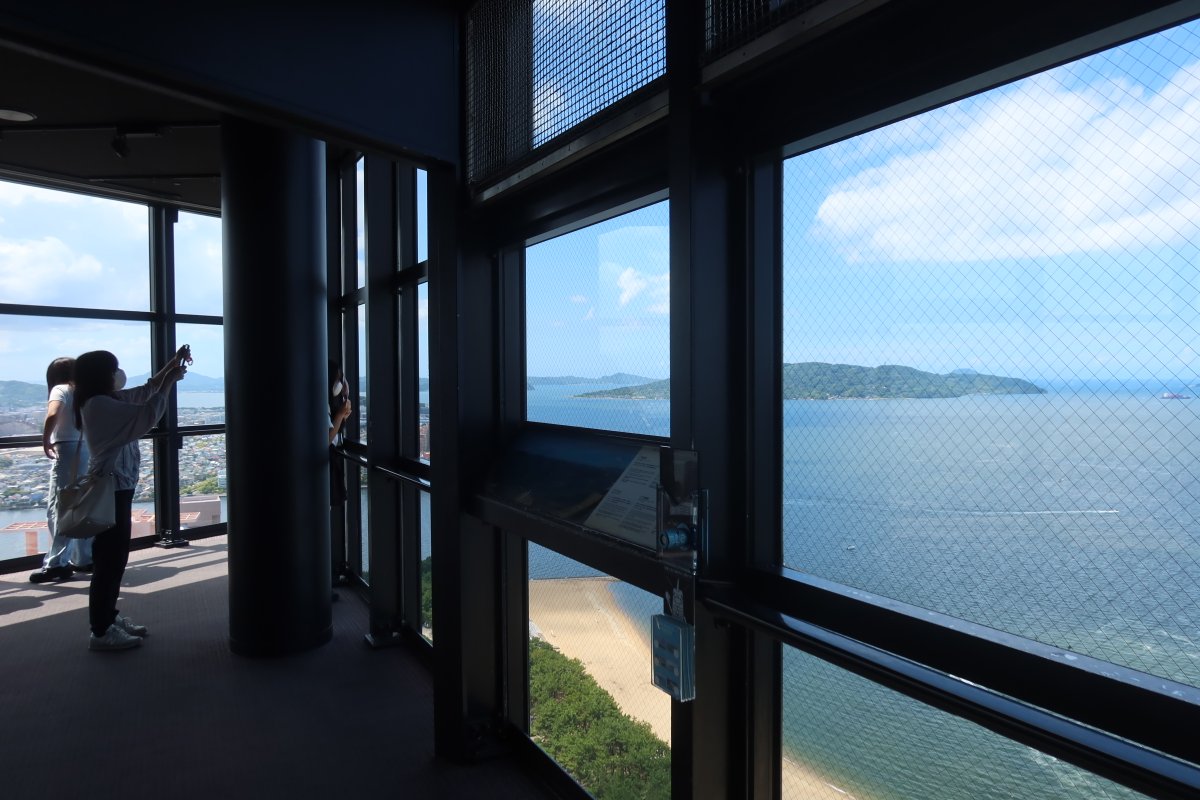
Hakata Port Tower, standing at Hakata Pier, is a 100-meter red steel tower opened in 1964 and designed by Tachu Naito, who also designed Tokyo Tower. Its round observation room, 70 meters up, is free to enter. When few people are around, only a Showa-era room surrounded by harbor lights floats quietly in the air.
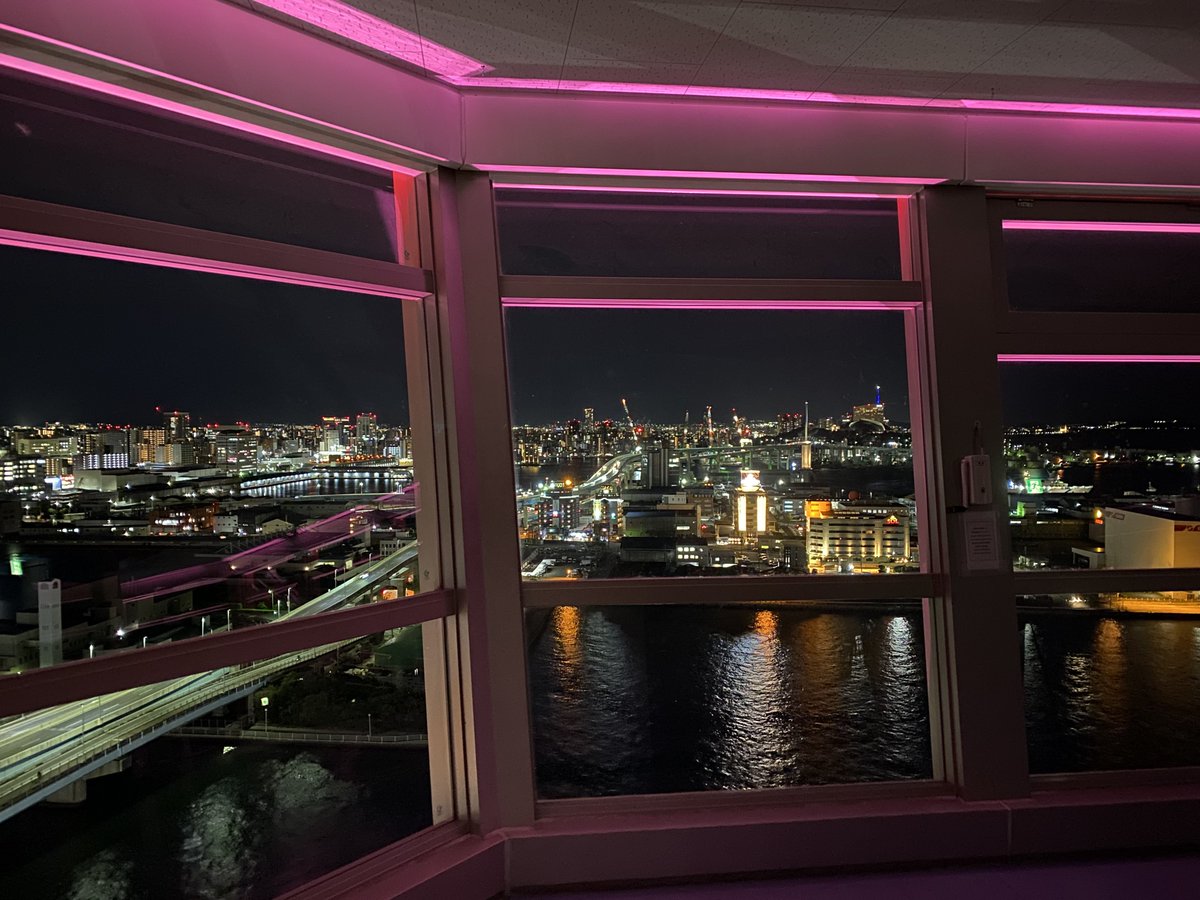
Fukuoka Tower at Momochihama is a 234-meter tower built as the monument of the 1989 Asia-Pacific Exposition. Its exterior is covered with about 8,000 half-mirrors. At night, the room is reflected in the windows of the observation deck 123 meters up, blurring the line between the sea, the city and your own reflection.
A Ferry Beneath a Bridge, and an Elevator That Climbs Diagonally
The Wakato Ferry in Kitakyushu is a small boat that crosses Dokai Bay between Wakamatsu and Tobata in about three minutes. It dates back to the Meiji era, and even after the Wakato Bridge was built directly overhead in 1962, it kept running at the request of local residents. The fare is 100 yen for adults. The sight of a small boat going back and forth beneath a huge red bridge feels slightly out of step with the flow of time.
The Glover Sky Road in Nagasaki is an elevator that climbs diagonally up the slope of Minamiyamate. It was built in 2002 as part of a city road, and anyone can ride it for free. A car with round windows rises quietly, looking down on the harbor and the houses on the hillside. It is a passage that is neither quite a road nor quite a ride, found only in a city of slopes.


A Retired Mine and Railways: A Shaft Tower, a Gorge Bridge and Gunkanjima
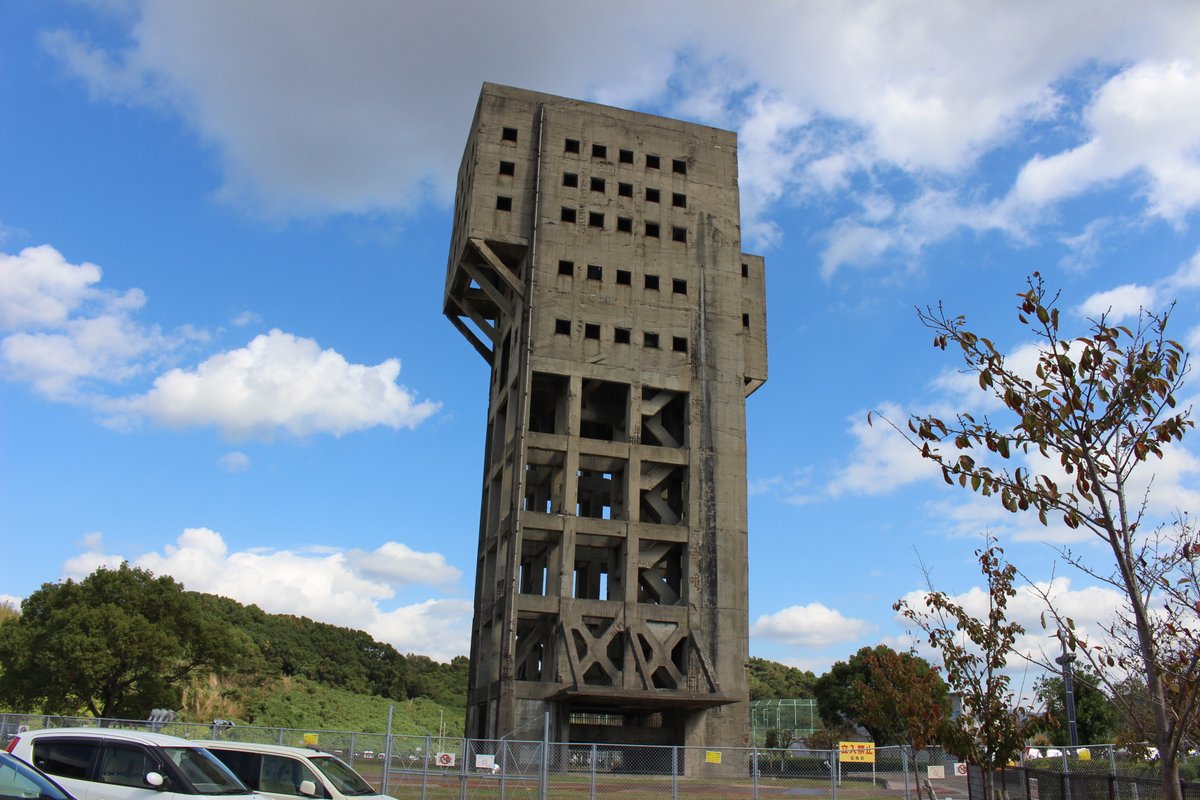
The Shime Coal Mine shaft tower in Shime, Fukuoka Prefecture, is a 47.65-meter reinforced-concrete tower completed in 1943. It was built as the shaft of a navy coal mine, later used by Japanese National Railways, and closed in 1964. It is an Important Cultural Property of Japan, surrounded by a park. A huge block of concrete rises abruptly from a residential neighborhood.
The Takachiho Bridge in Miyazaki Prefecture is a railway bridge 105 meters above the riverbed. The Takachiho Railway was cut off by a typhoon in 2005, and the section including the bridge was abolished in 2008, but today you can ride out onto the bridge on a cart run by the Takachiho Amaterasu Railway. Off Nagasaki Port, Hashima (Gunkanjima) is a coal-mining island that became uninhabited when its mine closed in 1974, and in 2015 it became part of a World Heritage Site. You can only land there on a guided tour.


Practical Notes for Visiting
Underground malls, ferries and the inclined elevator are places people use every day. When taking photos, take care not to capture shops, passersby or passengers clearly, and do not block the way. The Glover Sky Road runs through a residential area, so avoid photographing homes and residents. Tenjin Underground Mall asks for advance applications for professional shoots.
The Kanmon pedestrian tunnel is closed from 22:00 until 6:00 the next morning. The Wakato Ferry may be suspended in bad weather, and the Glover Sky Road sometimes stops for maintenance. You cannot enter the Shime shaft tower, so view it from the park. Gunkanjima cannot be visited on your own.
If You Shoot It, Put It on the Map
Kyushu still has many underground passages and old harbor buildings that no one has recorded. The transfer corridor you walk through every day may be exactly the view someone else is looking for.
LIMap is a map for recording those places with photos and locations. If you find one, please add it.
FAQ
Where can I easily experience a liminal space in Fukuoka?
Try Tenjin Underground Mall. It connects directly to Tenjin and Tenjin-Minami subway stations, and its corridors are open from 5:30 in the morning until late at night. Its dimly lit stone-paved corridors run a long way, and they are especially quiet after the shops close or before they open.
Can I walk through the Kanmon Tunnel?
Yes. It is free for pedestrians and open from 6:00 to 22:00. On the Moji side, the entrance is right by the Nishitetsu bus stop "Kanmon Tunnel Jindo-guchi," and you take an elevator down. The corridor is about 780 meters long, with the Fukuoka–Yamaguchi border marked on the floor partway along.
Are there places I can visit for free?
The Kanmon pedestrian tunnel (for pedestrians), the Tenjin Underground Mall corridors, the Hakata Port Tower observation room and the Glover Sky Road are free. The Wakato Ferry costs 100 yen for adults, and the Fukuoka Tower observation deck costs 1,000 yen for adults.
Found a liminal space of your own?
Record the photo and location on LIMap, and share it with people who feel the same pull toward these places.
Open the LIMap map
If this article opened a door to somewhere new,
you can support LIMap on Ko-fi →
You Might Also Like
 Games
7 Games Where You Can Walk Through Liminal Spaces: The Exit 8, Pools, Escape the Backrooms and More
Games
7 Games Where You Can Walk Through Liminal Spaces: The Exit 8, Pools, Escape the Backrooms and More
 Games
What Is the Game Pools? The Poolrooms Game, and Real Places That Feel Like Pools
Games
What Is the Game Pools? The Poolrooms Game, and Real Places That Feel Like Pools
 Real Spots
Liminal Spaces in Shizuoka and Tokai: 8 Real Places, From Escalators of Light to a Showa-Era Station
Real Spots
Liminal Spaces in Shizuoka and Tokai: 8 Real Places, From Escalators of Light to a Showa-Era Station
 Real Spots
Liminal Spaces in North Kanto: 9 Real Places, From an Underground Quarry to the Top Floors of Prefectural Offices
Real Spots
Liminal Spaces in North Kanto: 9 Real Places, From an Underground Quarry to the Top Floors of Prefectural Offices