
Where to Photograph Liminal Spaces in Kansai: Real Spots in Osaka, Hyogo, Nara and Shiga
When people think of liminal spaces in Japan, they often picture Tokyo's underground passages. But the Kansai region also has planned districts that have grown quiet and facilities that have outlived their original purpose. Here are places registered on LIMap that you can actually visit.

In Kansai, Liminal Spaces Gather in Planned Districts and Places That Have Finished Their Work
The liminal spaces you find in Kansai tend to fall into two groups. The first is large, carefully planned districts and complexes. Spaces built to receive crowds, such as an artificial island or a complex connected directly to a station, show a peculiar emptiness when few people are around.
The second is places such as railways and mines that have finished the job they were built for. Their function is gone, but the structures remain, and they let you feel the passage of time. Every place in this article was chosen on one condition: you can actually go there.
Kobe: An Artificial Island's Waterway and a Complex Attached to the Shinkansen Station
Rokko Island is an artificial island built off the coast of Kobe. The River Mall that runs through its center is a man-made waterway fed by water from the Sumiyoshi River; its northern section was completed in 1990 and its southern section in 1993. The elevated Rokko Liner runs overhead, above orderly plazas and sculptures. When few people are around, only the well-kept space itself seems to remain.
Shin-Kobe Oriental City, directly connected to Shin-Kobe Station, is another liminal space typical of Kansai. It is a large complex of a hotel, shops and a theater; the shopping zone was renamed KOTO no HAKO KOBE in 2019 and is still open. Although it sits right in front of the station, its wide corridors can be nearly empty at certain times of day.


Osaka: The World's First Capsule Hotel and a Department Store Rooftop Amusement Park
Capsule Inn Osaka in Umeda, designed by the architect Kisho Kurokawa and opened in 1979, is the world's first capsule hotel. Its corridors of identical sleeping pods are still in use today. This is a liminal space you experience by staying the night rather than by visiting.
On the roof of the Matsuzakaya department store in Takatsuki is Skyland, a rooftop amusement park that has been open since 1979. Rooftop amusement parks were once common on department stores across Japan, but only a handful remain. Showa-era rides lined up on top of a building bring nostalgia and strangeness at the same time.
 Capsule Inn Osaka (New Japan Umeda)
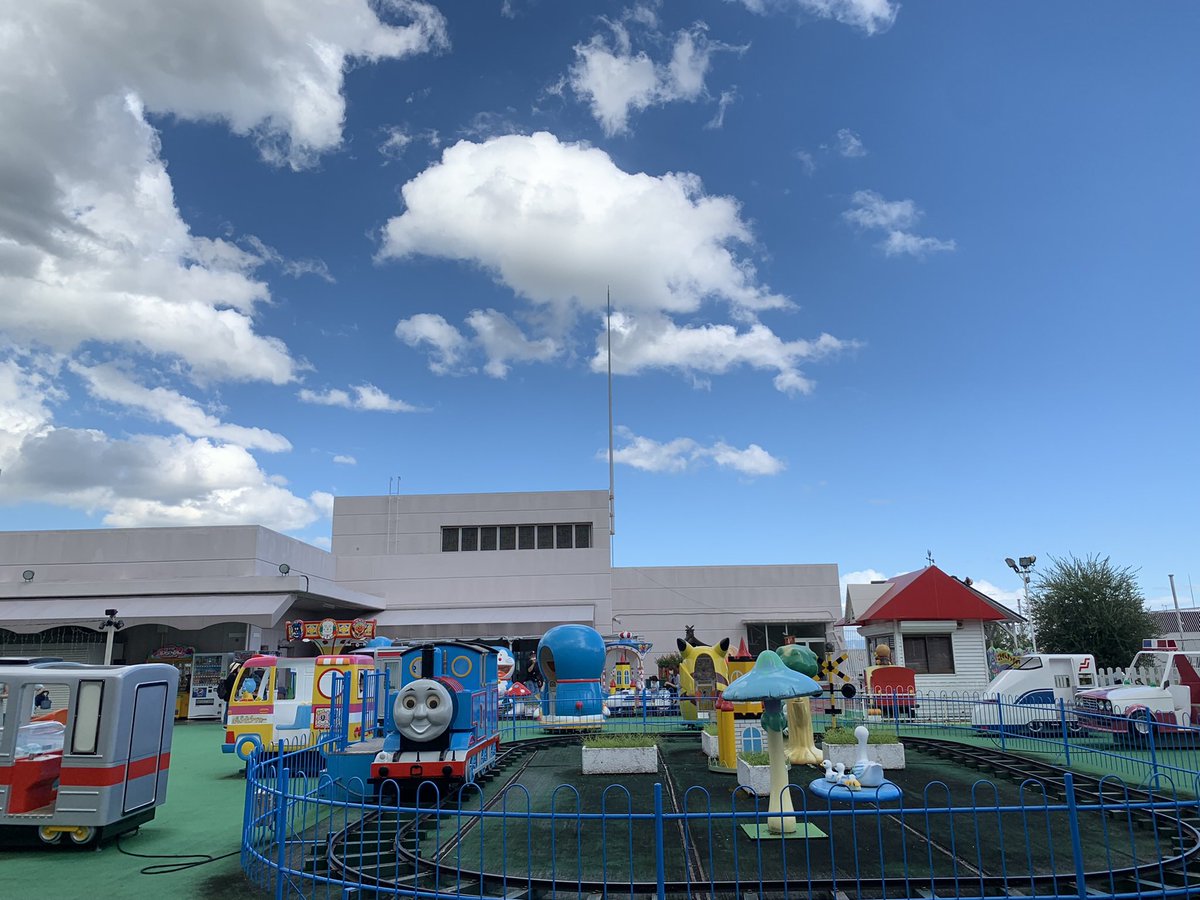 Rooftop Amusement Park Skyland (Matsuzakaya Takatsuki)
Hyogo's Sea and Mountains: The Remains of a Railway Bridge and an Ore-Dressing Plant
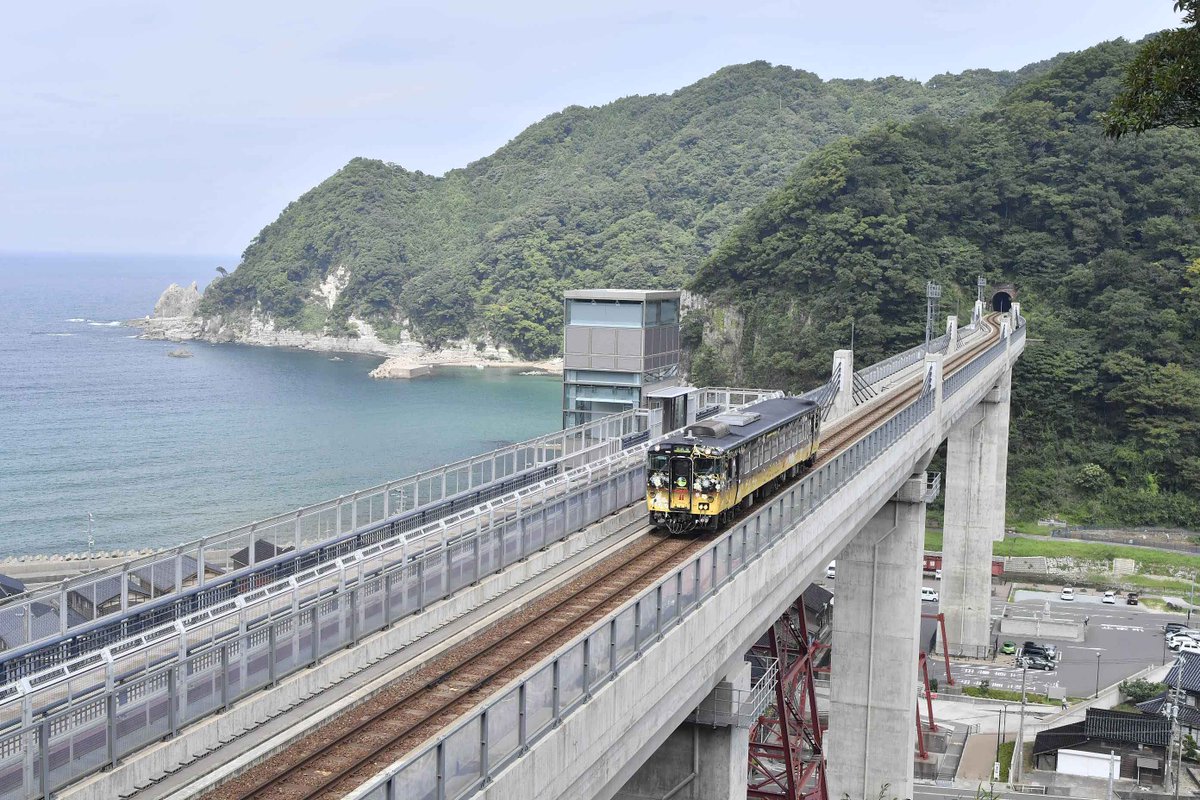
Amarube Viaduct Sky Station, in Kami Town on the Sea of Japan coast, is an observation deck built on part of the old Amarube Viaduct, which was completed in 1912. The viaduct was replaced by a concrete bridge in 2010, but the piers on the Amarube Station side were preserved, giving a view of the sea from about 41 meters above the ground. Since 2017 you can also ride an elevator to the top. Beyond the point where the old track ends, there is nothing but sea and sky.
The Mikobata Ore-Dressing Plant Ruins in Asago are the remains of a large processing plant built in 1919. It stopped operating in 1987, and its aging buildings were demolished in 2004. Today only the stepped concrete foundations remain on the mountainside. The buildings are gone, yet you can still read their shape.

Nara and Shiga: Tunnels Under a White Rock Hill and a Former "Bright Ruin"
Donzurubo in Kashiba, Nara, is a hill of exposed white tuff with strange rock formations. Beneath it lies a network of tunnels about 2 kilometers long, dug by the Imperial Japanese Army at the end of the Pacific War, and several of the entrances can be seen from outside. The contrast between the white rock and the dark openings is strongly unreal.
Pieri Moriyama in Moriyama, Shiga, is a large shopping mall on the shore of Lake Biwa. After opening in 2008 it lost tenant after tenant, and images of its nearly empty interior earned it the nickname "the bright ruin." It reopened after a renovation in December 2014 and many shops now operate there. It is no longer a ruin, but you can walk its wide atriums and long corridors with that memory in mind.


Practical Notes for Visiting
Most of the places here are open facilities or public spaces. Check each facility's rules on photography so you do not disturb shops or other visitors, and take care not to capture people's faces clearly.
At Donzurubo, look at the tunnel entrances from outside only. The interior carries risks of collapse and uneven footing, and part of it is used as a research facility.
LIMap also records abandoned sites that are closed to the public. For this article we chose only places that can be seen from outside or that are open for business. Please do not enter private property or restricted areas.
If You Shoot It, Put It on the Map
Much of Kansai is still unrecorded. The underground mall on your commute or a new town on a quiet weekend may be exactly the view someone else is looking for.
LIMap is a map for recording those places with photos and locations. If you find one, please add it.
FAQ
Where can I easily photograph liminal spaces in Kansai?
Open facilities and public spaces are the best choice. The River Mall on Rokko Island in Kobe, Shin-Kobe Oriental City next to Shin-Kobe Station and Amarube Viaduct Sky Station in Kami Town can all be visited without worrying about restricted access.
Is there anywhere I can go in central Osaka?
Capsule Inn Osaka in Umeda, which opened in 1979 as the world's first capsule hotel, still takes guests today. A little farther out, there is the Skyland rooftop amusement park on the Matsuzakaya department store in Takatsuki.
Is it all right to go and photograph abandoned buildings?
Please do not enter restricted areas or private property. LIMap records abandoned sites as well, but if you visit one, stay within what can be seen from outside.
Found a liminal space of your own?
Record the photo and location on LIMap, and share it with people who feel the same pull toward these places.
Open the LIMap map
If this article opened a door to somewhere new,
you can support LIMap on Ko-fi →
You Might Also Like
 Games
7 Games Where You Can Walk Through Liminal Spaces: The Exit 8, Pools, Escape the Backrooms and More
Games
7 Games Where You Can Walk Through Liminal Spaces: The Exit 8, Pools, Escape the Backrooms and More
 Games
What Is the Game Pools? The Poolrooms Game, and Real Places That Feel Like Pools
Games
What Is the Game Pools? The Poolrooms Game, and Real Places That Feel Like Pools
 Real Spots
Liminal Spaces in Shizuoka and Tokai: 8 Real Places, From Escalators of Light to a Showa-Era Station
Real Spots
Liminal Spaces in Shizuoka and Tokai: 8 Real Places, From Escalators of Light to a Showa-Era Station
 Real Spots
Liminal Spaces in North Kanto: 9 Real Places, From an Underground Quarry to the Top Floors of Prefectural Offices
Real Spots
Liminal Spaces in North Kanto: 9 Real Places, From an Underground Quarry to the Top Floors of Prefectural Offices