
Liminal Spaces in Hokkaido: 9 Real Places, From Sapporo's Underground Walkways to a Bridge That Sinks Into a Lake
In Hokkaido, Sapporo's long straight underground walkways, railway tracks no train will run on again and a ferry that will never sail are all still places anyone can visit. At a quiet hour, the stillness of these in-between places, left behind in a wide landscape, becomes easy to see. Here are nine places registered on LIMap.

In Hokkaido, Liminal Spaces Gather Underground and Along Retired Railways and Ships
The liminal spaces you find in Hokkaido have two main features. The first is underground Sapporo. Walkways and malls linking the stations with the city center run long and straight, with the same pillars and lights repeating without end.
The second is railways and ships whose shapes remain after their work ended. The tracks of a closed railway have become a walking path through town, and a ferry whose route was abolished is moored at its pier and open to visitors. This article focuses on places in Sapporo, Otaru and Hakodate chosen on one condition, that anyone can go there today, and also introduces two old railway sites in eastern Hokkaido.
Underground Sapporo: A 520-Meter Walkway and a Mall From 1971
The Sapporo Ekimae-dori Underground Walkway, known as Chi-Ka-Ho, is an underground passage about 520 meters long linking JR Sapporo Station with Odori. It opened in March 2011. Open spaces line both sides of a 12-meter-wide corridor, and white pillars and light from the skylights repeat at the same intervals as far as you can see. It is open from 5:45 to 24:30, and just after opening in the early morning, only an endless wide hallway remains.
Sapporo Underground Mall Pole Town, running from Odori to Susukino, is a mall about 400 meters long that opened in 1971, the year before the Sapporo Winter Olympics. Its corridor is packed during the day, but once the shutters are down, or on days when the whole mall is closed, it becomes a long underground passage lined with near-identical shopfronts.
 Sapporo Ekimae-dori Underground Walkway (Chi-Ka-Ho)
 Sapporo Underground Mall Pole Town
Empty Stages: An Isamu Noguchi Park and a Town Where No One Lives
Moerenuma Park in Sapporo's Higashi Ward was built on the site of a former waste-disposal facility, following a basic design by the sculptor Isamu Noguchi with the idea of making the whole park a single work of sculpture. Construction began in 1982, and the park fully opened in 2005. An artificial hill, a glass pyramid, straight rows of trees: only geometric forms placed under a wide sky. On a quiet morning, it looks like a stage someone prepared and then forgot.
The Historical Village of Hokkaido in Atsubetsu Ward is an open-air museum of buildings from the Meiji era to the early Showa era, moved or reconstructed here. It opened in 1983. Town offices, shops and a station building line its 54 hectares, but no one lives there. On a quiet day, it feels like walking through a stage set cut away from time, streets and all.


Otaru: Tracks No Train Will Run On, and a Bank That Has Closed
Otaru's former Temiya Line was part of Hokkaido's first railway, opened in 1880, and was closed in 1985. The tracks were never removed, and about 1.6 kilometers through town have been turned into a walking path. Rails and level crossings that no train will use again run straight between the buildings.
Close to the tracks, the former Otaru Branch of the Bank of Japan was built in 1912. After the branch closed in 2002, it opened as a free museum of finance. On a street once lined with banks and nicknamed the "Wall Street of the North," its atrium-like former banking hall and huge vault door hold the quiet of a bank that has finished its work.

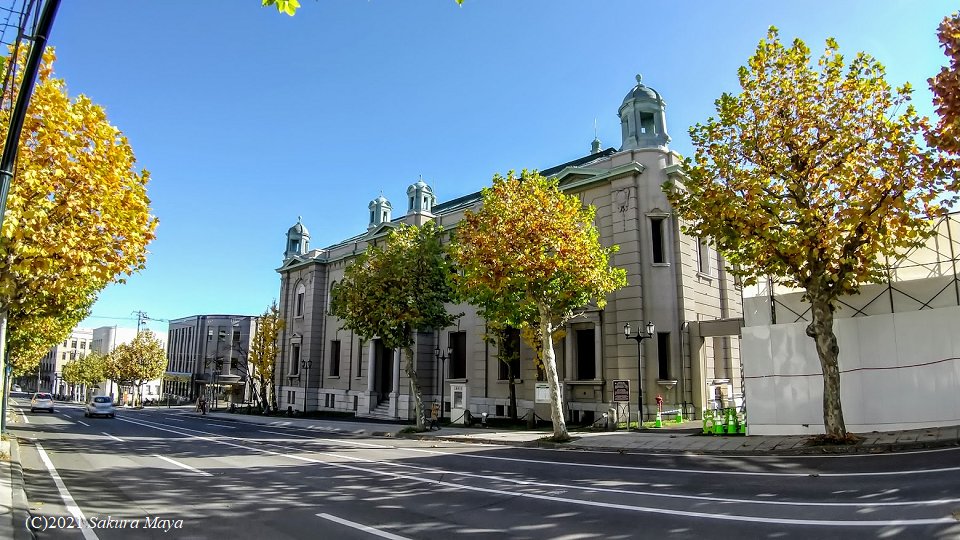

Hakodate: A Ferry That Will Never Sail Again
About three minutes' walk from Hakodate Station, the Seikan ferry Mashu Maru is moored at the pier. It entered service in 1965 and linked Aomori and Hakodate until the Seikan ferry route was abolished in March 1988. It is now open as a memorial museum, where you can see rows of seats, the bridge and the radio room.
Sit in a passenger cabin with no other passengers, and the harbor is still there outside the window. Inside a ship that will never sail again, the time after its final voyage simply goes on.
 Seikan Ferry Memorial Ship Mashu Maru
Eastern Hokkaido: A Bridge That Sinks Into a Lake, and a Station in the Forest
At Lake Nukabira in Kamishihoro, the Taushubetsu River Bridge of the former Shihoro Line still stands. Completed in 1937, it is a concrete bridge with a row of eleven arches. It fell out of use in 1955, when the line was rerouted for the construction of the Nukabira Dam. Depending on the lake's water level, it appears from winter into spring and sinks back beneath the water by autumn. You can see it across the lake from an observation deck a short walk from a parking area on National Route 273.
At the site of Horoka Station on the same Shihoro Line, the platforms and tracks, including a set of points, still remain. Train service was suspended in 1978, and the line was abolished in 1987. Deep in the forest, only a platform with no one waiting for a train is left.


Practical Notes for Visiting
Underground malls, museums and memorial ships are places where people work and visit. When taking photos, take care not to capture shops or people's faces clearly, and avoid tripods and flash. At the Historical Village of Hokkaido, live-streaming on social media and flying drones are prohibited. Chi-Ka-Ho is closed from late at night until early morning.
The two old railway sites in eastern Hokkaido are in brown bear country. Ordinary vehicles cannot use the forest road that leads to the Taushubetsu River Bridge, so view it from the observation deck by the highway or join a local guided tour. Winter days in Hokkaido are short and roads can be closed by snow, so leave plenty of margin for time and weather.
If You Shoot It, Put It on the Map
Hokkaido still has many underground passages and retired buildings that no one has recorded, and some views only appear in the snowbound season.
LIMap is a map for recording those places with photos and locations. If you find one, please add it.
FAQ
Where can I easily experience a liminal space in Sapporo?
Try Chi-Ka-Ho, the underground walkway between Sapporo Station and Odori, and Pole Town, the underground mall from Odori to Susukino. Both connect directly to stations and have long corridors where the same view repeats. Early morning, or after the shops close, is the best time.
When can I see the Taushubetsu River Bridge?
It depends on the water level of Lake Nukabira. In a typical year, it appears as the water drops from winter into spring and sinks back beneath the water by autumn. You can see it from an observation deck a short walk from a parking area on National Route 273. The forest road to the bridge is closed to ordinary vehicles and bear precautions are needed, so join a guided tour if you want to see it up close.
Are there places I can visit for free?
The Chi-Ka-Ho and Pole Town corridors and the former Temiya Line in Otaru are free to walk through. The Bank of Japan Otaru Museum is also free to enter. The Historical Village of Hokkaido and the Mashu Maru charge admission.
Found a liminal space of your own?
Record the photo and location on LIMap, and share it with people who feel the same pull toward these places.
Open the LIMap map
If this article opened a door to somewhere new,
you can support LIMap on Ko-fi →
You Might Also Like
 Games
7 Games Where You Can Walk Through Liminal Spaces: The Exit 8, Pools, Escape the Backrooms and More
Games
7 Games Where You Can Walk Through Liminal Spaces: The Exit 8, Pools, Escape the Backrooms and More
 Games
What Is the Game Pools? The Poolrooms Game, and Real Places That Feel Like Pools
Games
What Is the Game Pools? The Poolrooms Game, and Real Places That Feel Like Pools
 Real Spots
Liminal Spaces in Shizuoka and Tokai: 8 Real Places, From Escalators of Light to a Showa-Era Station
Real Spots
Liminal Spaces in Shizuoka and Tokai: 8 Real Places, From Escalators of Light to a Showa-Era Station
 Real Spots
Liminal Spaces in North Kanto: 9 Real Places, From an Underground Quarry to the Top Floors of Prefectural Offices
Real Spots
Liminal Spaces in North Kanto: 9 Real Places, From an Underground Quarry to the Top Floors of Prefectural Offices