
Liminal Spaces in Chugoku and Shikoku: 9 Real Places, From Kenzo Tange's Prefectural Office to Abandoned Railway Lines
In Chugoku and Shikoku, postwar public buildings still in use and stations and tracks left behind after the trains stopped are places anyone can visit. At a quiet hour, you notice that the same kind of stillness runs through both the places still in use and the places no longer used. Here are nine places registered on LIMap.

In Chugoku and Shikoku, Liminal Spaces Gather in Postwar Public Buildings and Retired Railways
The liminal spaces you find in Chugoku and Shikoku have two main features. The first is public buildings and passages built from the postwar years into the 2000s: the pilotis of a prefectural office, the visitor walkway of a waste-disposal plant, a long shopping arcade. When few people are around, only the wide-open spaces remain.
The second is railways that have finished their work: the terminus of an abolished line, a terminus where steam-era equipment still stands, and a disused line where bamboo grows over the rails. This article introduces places in Kagawa, Hiroshima, Shimane, Tottori, Tokushima and Ehime chosen on one condition: anyone can go there today.
Takamatsu: A 2.7-Kilometer Arcade and Kenzo Tange's Prefectural Office
Takamatsu Central Shopping District links eight shopping streets under arcades that run for a total of about 2.7 kilometers. At the northern end of Marugamemachi is a plaza under a 32.2-meter glass dome. Early in the morning or at night, with the shutters down, empty streets stretch on under the bright roof, and the plaza beneath the huge dome only makes the emptiness stand out.
The East Building of the Kagawa Prefectural Office, designed by Kenzo Tange, was completed in 1958. In 2022 it became the first postwar government office building designated an Important Cultural Property of Japan. Its pilotis lined with bare concrete columns and its ground-floor lobby hold murals by Genichiro Inokuma, and anyone can visit during weekday office hours. When few people are around, the lobby quietly holds the air of the "open government office" imagined after the war.

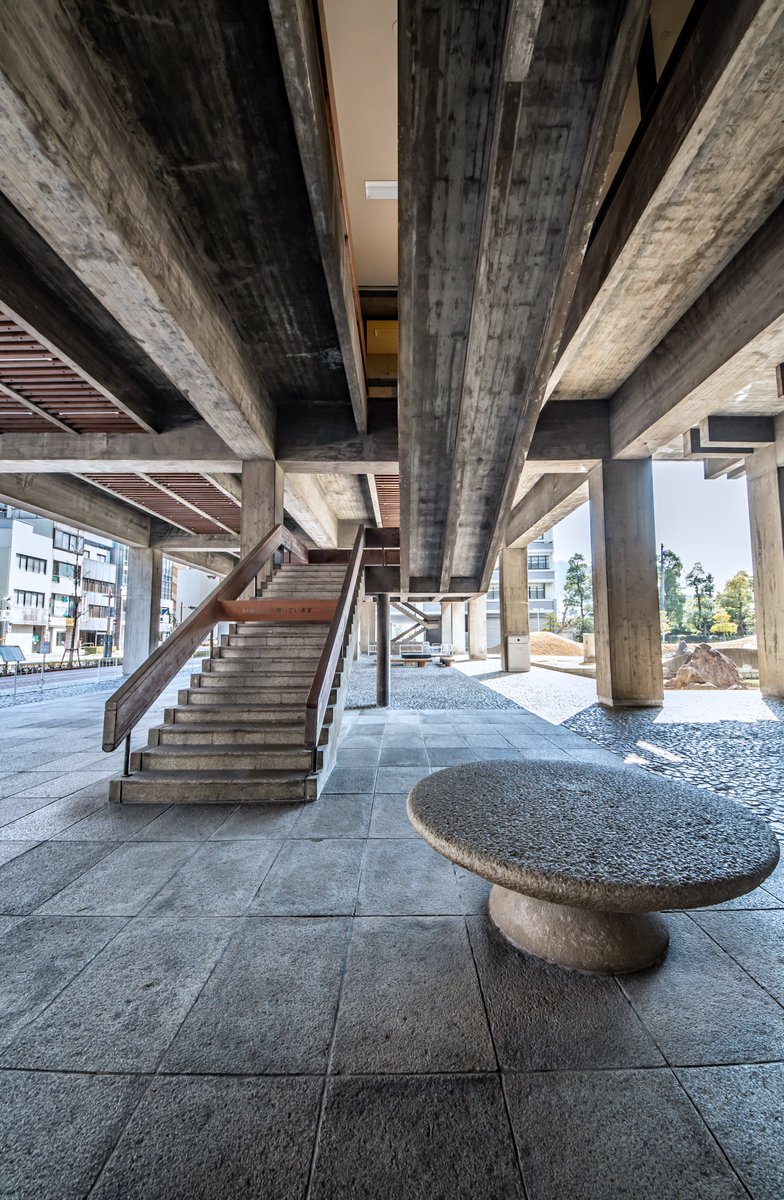
Hiroshima: A Walkway Through a Waste Plant, and a Cross-Shaped Underground Mall
The Hiroshima City Naka Incineration Plant, designed by Yoshio Taniguchi, was completed in 2004. It was designed so that the axis running from the Peace Memorial Park toward the sea passes straight through the building. You can walk through the glass-walled visitor space called the Ecorium, looking down on working machinery, and come out on the side facing the sea. It is open without reservation from 9:00 to 16:30.
Kamiyacho Shareo is an underground mall that runs in a cross shape beneath the Kamiyacho intersection in central Hiroshima. It opened in 2001. Before the shops open or after they close, its long corridors and central plaza, lit only by bright lights, become an underground space with no clear destination.
 Hiroshima City Naka Incineration Plant (Ecorium)
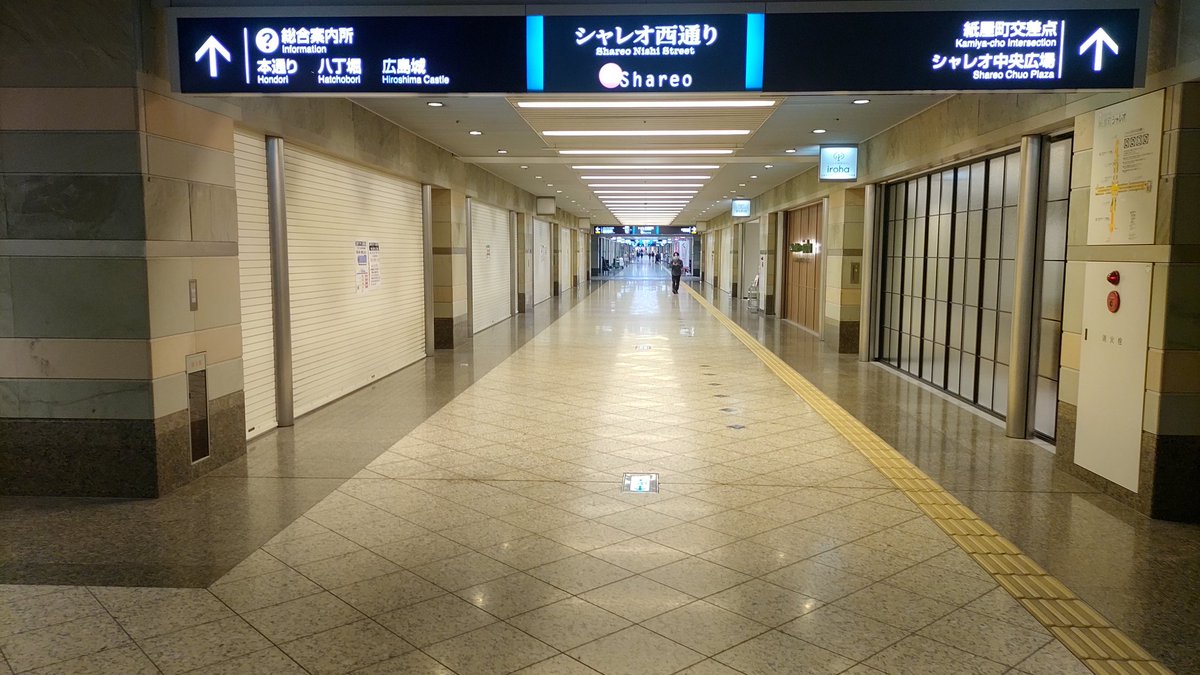 Kamiyacho Shareo (Underground Mall)

Stations and Tracks That Have Finished Their Work: Taisha, Wakasa and the Kurayoshi Line
The former Taisha Station in Izumo, Shimane Prefecture, was the terminus of the Taisha Line, abolished in 1990. Its Japanese-style wooden station building, built in 1924 and evoking Izumo Taisha shrine, is an Important Cultural Property of Japan, and its platforms and a D51 steam locomotive remain as they were. After conservation work, it reopened to the public in April 2026. Standing on a platform where no train will come again, it feels as if time stopped partway through.
Wakasa Station in Tottori Prefecture, opened in 1930, is the terminus of the Wakasa Railway and the easternmost station in the Chugoku region. Beyond the tracks stand a hand-operated turntable, a water tower, a coaling stage and a C12 steam locomotive. Also in Tottori, the former Kurayoshi Line closed in 1985, but the section from Sekigane to Yamamori has been maintained so you can walk along rails covered by bamboo groves.
 Former Taisha Station
 Wakasa Station (Wakasa Railway)
 Former Kurayoshi Line (Bamboo Grove)
Up the Mountain: A Ropeway From a Station Inside a Building, and a Mining Town in the Hills
The Bizan Ropeway in Tokushima opened in 1957. Its base station is inside the Awa Odori Kaikan building, and after boarding on an upper floor you reach the 290-meter summit in about six minutes. A station inside a building, and a summit station with few people in the evening, feel like somewhere partway to an unknown destination.
The Tonaru district of the former Besshi Copper Mine in Niihama, Ehime Prefecture, is the site of a mountain town where the mining headquarters stood from the Taisho era into the early Showa era, sometimes called the "Machu Picchu of the East." Red-brick and stone ore bins and the remains of an incline line a steep slope, and on a foggy morning it looks like the ruins of some faraway country.
 Bizan Ropeway (Awa Odori Kaikan Base Station)
 Former Besshi Copper Mine, Tonaru District
Practical Notes for Visiting
The prefectural office, the waste plant, the arcade, the underground mall and the stations are all places people still work in and use. When taking photos, take care not to capture staff or passersby clearly. Visits to the Kagawa Prefectural Office East Building are limited to weekday office hours, and tours inside the Naka plant require a reservation. To see the far end of the Wakasa Station yard, buy an admission ticket at the window and follow staff instructions.
The former Taisha Station has charged admission since it reopened in April 2026. The Bizan Ropeway is suspended once a year for inspection. Mountain sites such as the Kurayoshi Line trail and Tonaru can have uneven footing, so wear comfortable shoes.
If You Shoot It, Put It on the Map
Chugoku and Shikoku still have many postwar public buildings and retired stations that no one has recorded. The arcade or underground mall you pass every day may look like a different place early in the morning.
LIMap is a map for recording those places with photos and locations. If you find one, please add it.
FAQ
Can anyone visit the Kagawa Prefectural Office East Building?
Yes. Shared areas such as the pilotis and the ground-floor lobby can be visited freely during weekday office hours (8:30 to 17:15). Offices are off-limits. It is still a working government building, so take care not to photograph staff or visitors.
Are there places I can visit for free?
The Takamatsu Central Shopping District arcades, the shared areas of the Kagawa Prefectural Office East Building, the Ecorium at the Naka Incineration Plant, the Kamiyacho Shareo corridors and the former Kurayoshi Line trail are free. The former Taisha Station costs 300 yen for adults, a Wakasa Station yard admission ticket costs 300 yen, and a Bizan Ropeway round trip costs 1,500 yen.
Can I still visit the former Taisha Station?
Yes. After conservation work, it reopened to the public in April 2026. It is open from 9:00 to 16:30 and closed on Wednesdays, and has charged admission (300 yen for adults) since reopening.
Found a liminal space of your own?
Record the photo and location on LIMap, and share it with people who feel the same pull toward these places.
Open the LIMap map
If this article opened a door to somewhere new,
you can support LIMap on Ko-fi →
You Might Also Like
 Games
7 Games Where You Can Walk Through Liminal Spaces: The Exit 8, Pools, Escape the Backrooms and More
Games
7 Games Where You Can Walk Through Liminal Spaces: The Exit 8, Pools, Escape the Backrooms and More
 Games
What Is the Game Pools? The Poolrooms Game, and Real Places That Feel Like Pools
Games
What Is the Game Pools? The Poolrooms Game, and Real Places That Feel Like Pools
 Real Spots
Liminal Spaces in Shizuoka and Tokai: 8 Real Places, From Escalators of Light to a Showa-Era Station
Real Spots
Liminal Spaces in Shizuoka and Tokai: 8 Real Places, From Escalators of Light to a Showa-Era Station
 Real Spots
Liminal Spaces in North Kanto: 9 Real Places, From an Underground Quarry to the Top Floors of Prefectural Offices
Real Spots
Liminal Spaces in North Kanto: 9 Real Places, From an Underground Quarry to the Top Floors of Prefectural Offices