
What Are the Backrooms Levels? From Level 0 to The End — and Why There Is No Official Canon
Look into the Backrooms and you run into Level 0 and Level 37 almost immediately. Then you notice the wikis disagree, and it becomes unclear which version is real. Here are the levels people actually talk about — and an explanation of why no two sources match.
.jpg?width=1200)
What a Level Actually Is
The shared framework is that the Backrooms is divided into layers called levels. Slip through a wall in reality and you land in Level 0; from there you can fall further into other layers, nested inside one another.
None of this was in the original post. The 2019 message on 4chan described one thing only: yellow rooms going on forever. The level system was invented afterwards, collaboratively, as people built out wikis.
The Levels People Actually Talk About
Level 0, the Lobby, is the yellow room everyone pictures: stained wallpaper, damp carpet, the hum of fluorescent tubes. No hostile entities, but no water or food either — and a non-Euclidean layout where walking in a straight line returns you somewhere else entirely.
Later levels shift into vast warehouse-like spaces, parking-garage-like spaces, and so on. The most popular of them is Level 37, the Poolrooms: blue tile and lukewarm water, closer to nostalgia than to fear.
At the far end sits The End. What is actually there, though, differs completely from wiki to wiki.
The Key Point: There Is No Official Canon
This is the part that trips people up. The Backrooms has no rights holder and no original author. The English wikis on Fandom, the ones on Wikidot, the Japanese-language wikis — each maintains its own separate continuity, and the same Level 4 will be described differently in each.
So hunting for the correct level list is close to meaningless: the answer changes with the source you happen to be reading. That is not a flaw. It is what collaborative fiction with no single author looks like.
The 2026 film works the same way. It follows the interpretation director Kane Parsons built in his own YouTube series — a 1990s research organisation called Async that found a doorway to another dimension — rather than adapting any wiki's canon.
Places Close to Level 0 Exist in the Real World
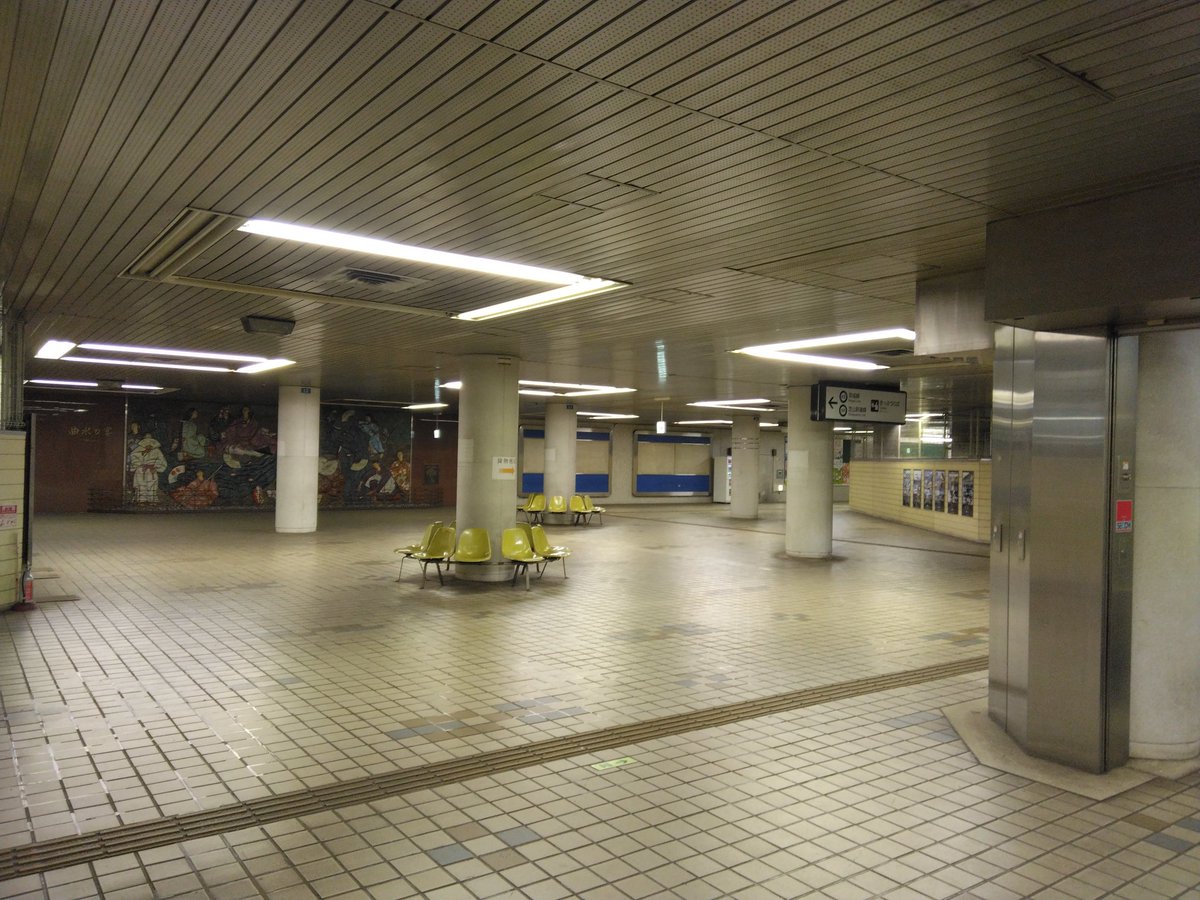
The level framework appeals to people because it gives a vocabulary to spaces that are familiar and wrong at the same time. Uniformity, emptiness, no visible exit — where those three line up, the feeling shows up in reality too.
LIMap records places like that with their actual locations. Not to verify anyone's canon, but to go and check where that feeling lives.

Found a liminal space of your own?
Record the photo and location on LIMap, and share it with people who feel the same pull toward these places.
Open the LIMap map
If this article opened a door to somewhere new,
you can support LIMap on Ko-fi →
You Might Also Like
 Games
7 Games Where You Can Walk Through Liminal Spaces: The Exit 8, Pools, Escape the Backrooms and More
Games
7 Games Where You Can Walk Through Liminal Spaces: The Exit 8, Pools, Escape the Backrooms and More
 Games
What Is the Game Pools? The Poolrooms Game, and Real Places That Feel Like Pools
Games
What Is the Game Pools? The Poolrooms Game, and Real Places That Feel Like Pools
 Real Spots
Liminal Spaces in Shizuoka and Tokai: 8 Real Places, From Escalators of Light to a Showa-Era Station
Real Spots
Liminal Spaces in Shizuoka and Tokai: 8 Real Places, From Escalators of Light to a Showa-Era Station
 Real Spots
Liminal Spaces in North Kanto: 9 Real Places, From an Underground Quarry to the Top Floors of Prefectural Offices
Real Spots
Liminal Spaces in North Kanto: 9 Real Places, From an Underground Quarry to the Top Floors of Prefectural Offices