
Finding Abandoned Buildings on a Map: Japan's Ruins, Without the Haunted-House Angle
You want to photograph abandoned buildings, but a haunted-spot pilgrimage isn't really the point. If that sounds like you, this article rounds up photogenic ruins across Japan — for the atmosphere and the architecture, not the ghost stories — with real examples mapped on LIMap.

An Abandoned Building Isn't the Same Thing as a Haunted Spot
Mention an abandoned building, and a lot of people immediately think "haunted spot" or a dare to go inside. But most people who actually visit ruins to take photos aren't interested in ghosts or the supernatural at all. What they're after is the particular texture that comes from a building or piece of equipment being left to time, and the light and shadow found nowhere else.
Interest in these places as industrial heritage has grown too, and they turn up regularly in photo books and exhibitions. This article rounds up ruins worth visiting purely for the photos, with real examples recorded on LIMap.
What to Keep in Mind When Visiting Ruins for Photos
Most abandoned buildings are private property, and entering without permission can count as trespassing. Some are also structurally unsound, with real risk of a floor giving way or part of the structure collapsing. Rather than going in just because it looks possible, it's safer to choose places with an organized viewing tour, or ones you can photograph from a designated lookout or from outside the property line.
The spots introduced on LIMap are simply a record of "places like this exist" — not a recommendation to enter. If you're considering a visit, always check the on-site signage and rules first.

Real Examples Recorded on LIMap
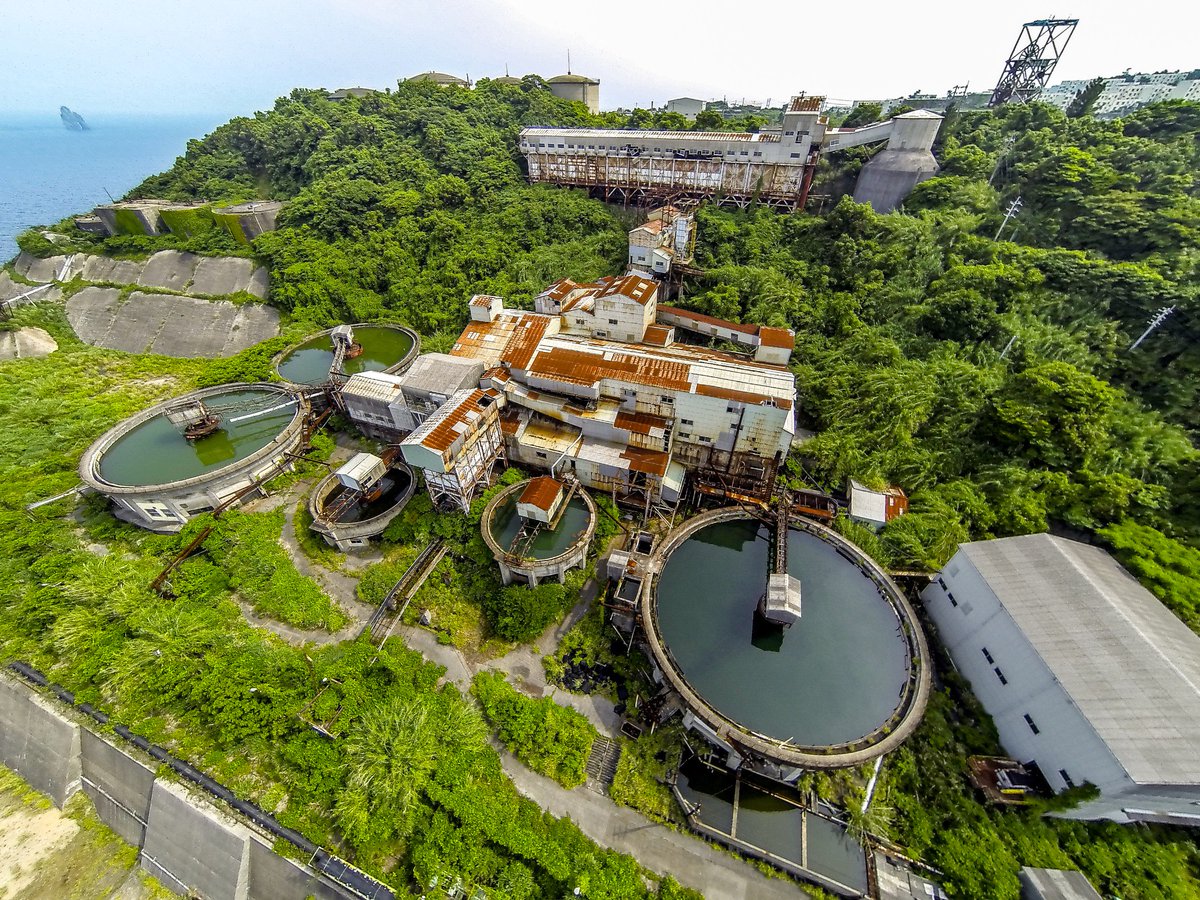
Take the Mikobata Ore Processing Plant Ruins in Hyogo, nicknamed "the Machu Picchu of the East" for the terraced concrete foundations stacked up a mountainside. Or Shima Marineland in Mie, a closed aquarium whose white building still stands quietly overlooking Ago Bay. Or the former coal-washing plant on Ikeshima in Nagasaki, once Japan's last operating undersea coal mine — its rusted sheet-metal roofs and piping stack up the slope in a shape that, from the air, looks almost like one giant machine.


Check the Exact Location on the Map
None of these rely on anything supernatural — what draws people in is the sheer presence of the buildings and equipment themselves, and the weight of the time layered into them. If one of these catches your interest, you can check its exact location on the LIMap map.
If you know of an abandoned building or piece of industrial heritage yourself, consider recording it on LIMap too — with safety and site etiquette in mind, and a photo to go with it.
Found a liminal space of your own?
Record the photo and location on LIMap, and share it with people who feel the same pull toward these places.
Open the LIMap map
If this article opened a door to somewhere new,
you can support LIMap on Ko-fi →
You Might Also Like
 Games
7 Games Where You Can Walk Through Liminal Spaces: The Exit 8, Pools, Escape the Backrooms and More
Games
7 Games Where You Can Walk Through Liminal Spaces: The Exit 8, Pools, Escape the Backrooms and More
 Games
What Is the Game Pools? The Poolrooms Game, and Real Places That Feel Like Pools
Games
What Is the Game Pools? The Poolrooms Game, and Real Places That Feel Like Pools
 Real Spots
Liminal Spaces in Shizuoka and Tokai: 8 Real Places, From Escalators of Light to a Showa-Era Station
Real Spots
Liminal Spaces in Shizuoka and Tokai: 8 Real Places, From Escalators of Light to a Showa-Era Station
 Real Spots
Liminal Spaces in North Kanto: 9 Real Places, From an Underground Quarry to the Top Floors of Prefectural Offices
Real Spots
Liminal Spaces in North Kanto: 9 Real Places, From an Underground Quarry to the Top Floors of Prefectural Offices